Best Air Cooler Under ₹10,000 in India (2026) – Top 10 Picks
✔ No fake reviews
✔ AI-ranked picks
✔ Prices updated today
🔥 Top 3 Picks (AI Ranked)
🏆 BEST PICK

Kenstar TallDe HC 27 L Room/Personal
Use this as a practical shortlist pick.
⭐ BESTPICKR TAKE
Use this as a practical shortlist pick.
- ✅ Current top-price fit in this shortlist.
- ✅ In-stock option with verified listing data.
Why this pick?
Why not others
- This is the safer final pick if you want fewer compromises after purchase
₹5,399
₹10,490
🔥 Save ₹5,091
🥈 Best Budget
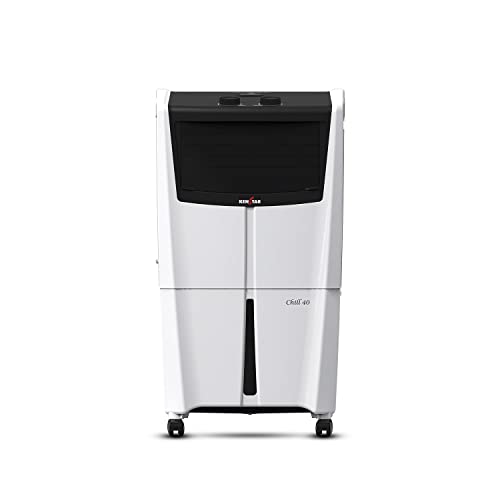
Kenstar CHILL HC 40 Personal Air
Practical pick if you want lower cost with inverter cooling.
₹6,299

🥉 Best Performance
Kenstar Auster 60 Window Air Cooler
Better if stronger performance matters more than lowest price.
₹7,599
Get price-drop alerts on WhatsApp
Selected deals, top picks and buying tips. No spam.
No spam • Selected updates only
🔥 Trending in this category
Get price-drop alerts on WhatsApp
Selected deals, top picks and buying tips. No spam.
No spam • Selected updates only

bestpickr™ editorial · 2026 · Updated 2026
Looking for the best air cooler under ₹10,000 in India? This guide is built for buyers who care about actual cooling performance, inverter compatibility, and long-term reliability — not inflated airflow numbers on Amazon listings. We focus on picks that still make sense in 2026 by checking live pricing, real room coverage, and BestPickr AI scoring. That means fewer dead-end clicks, fewer overhyped options, and a faster shortlist built around real value for Indian summers.
Top 3 Quick Picks
Fast answers for readers who want the shortlist before diving into the full guide.
View full buying guide → bestpickr.in/air-coolers
Editor's Choice — Best Overall Symphony Sumo 75 XL Desert Air Cooler 75L tank · 4500 m³/hr airflow · Honeycomb pads · Dura-pump · 4-way air deflection India's highest-airflow home cooler under ₹10,000. 75L tank runs 14–16 hours without refilling. Best for large halls and open living rooms up to 300 sq ft. ₹8,499 approx
Best Value — Best for Power-Cut Cities Havells Celia 55L DC Inverter Air Cooler 55L tank · DC inverter motor · 1800 m³/hr · Wi-Fi app control · Alexa compatible The only pick here with a DC motor — runs on a standard home inverter during power cuts. 30–40% lower electricity consumption. Best for bedrooms in tier-2 cities with frequent load-shedding. ₹9,499 approx
Top Rated — Best Auto-Fill Convenience Bajaj DMH67 Desert Air Cooler 67L tank · 3500 m³/hr · Multifan technology · Direct water inlet Connect a tap line once — never refill manually again. Best for families who want zero daily maintenance on water topping. ₹7,999 approx
Best Air Cooler Under ₹10,000 in India 2026 — Large Room Cooling and Smart Features
₹10,000 is the premium air cooler segment in India — large tank desert coolers, inverter-compatible models, Wi-Fi app control, and commercial-grade airflow for halls and large rooms all become accessible. This is also the price point where an air cooler stops being a stopgap and starts being your primary summer appliance — provided you live in the right climate.
How an Air Cooler Actually Cools — A 2-Minute Primer
Understanding the mechanism helps you decide whether an air cooler is the right choice for your city — before spending ₹10,000.
An air cooler works on evaporative cooling. A pump draws water from the tank and flows it down large pads (honeycomb or aspen). A fan pulls hot dry air from outside through these wet pads. As air passes through, water evaporates — and evaporation absorbs heat energy from the air, cooling it by 5–12°C before it enters the room.
The critical variable: ambient humidity. Evaporation only works when the air has capacity to absorb more moisture. In dry conditions (below 50% relative humidity) — air coolers work very well. When humidity is already 70%+ — the air cannot absorb more moisture, evaporation slows, and the cooler stops cooling meaningfully.
This is why an air cooler that works brilliantly in Jaipur or Nagpur fails completely in Mumbai or Chennai. The physics doesn't change — the climate does.
Before buying: check your city's average May–June humidity. If it consistently exceeds 60%, budget for an AC instead.
Specifications That Actually Matter
Airflow — m³/hr (Not Fan Speed)
Airflow in cubic metres per hour is the primary cooling spec — it tells you how much air the cooler processes and circulates per hour.
- Up to 1500 m³/hr: Personal and small room use — up to 120 sq ft
- 1500–2500 m³/hr: Standard bedroom use — 120–200 sq ft
- 2500–3500 m³/hr: Large bedroom or small hall — 200–250 sq ft
- 3500–4500 m³/hr: Large hall and semi-open spaces — 250–300 sq ft
Higher airflow is not always better for small rooms — a 4500 m³/hr cooler in a 100 sq ft bedroom creates uncomfortable wind-tunnel conditions. Match airflow to room size.
Tank Capacity and Runtime
The tank determines how often you refill — a practical daily concern in Indian summers.
- 20–30L: Refill every 4–6 hours — needs attention twice daily
- 40–55L: Refill every 8–10 hours — once a day is sufficient
- 60–80L: Refill every 12–16 hours — morning fill lasts through the night
At ₹10,000, 55–75L tanks are standard. Combined with an auto-fill water inlet (available on Bajaj DMH67), you can eliminate manual refilling entirely by connecting a tap line.
Motor Type — AC vs DC
This is the most important spec for Indian buyers in power-cut-prone cities — and the most overlooked.
- AC motor: Standard induction motor. Draws 150–250W. Cannot run on a home inverter (startup surge trips most UPS systems). Good for grid-stable cities.
- DC motor: Brushless DC motor. Draws 80–180W. Runs smoothly on any 600VA+ home inverter. 30–40% lower electricity consumption. Quieter operation.
If your city has regular power cuts from April to June — a DC motor cooler is not a luxury, it's a necessity.
Cooling Pad Quality
The pad is the engine of an air cooler — water flows down it, air blows through it, and evaporation happens here.
- Wood wool / aspen pads: Basic. Adequate first season, degrades faster, retains odour
- Standard honeycomb: Better surface area, lasts 2–3 seasons with care
- Large multi-side honeycomb (3-sided): Available on desert coolers at ₹10,000. Three-sided pad arrangement (left, right, back) dramatically increases evaporative surface — the primary reason desert coolers cool more aggressively than tower coolers
🌬️ Which air cooler under ₹10,000 actually cools large rooms in Indian heat? bestpickr™ scores every cooler on real airflow, tank size, and inverter compatibility from verified Indian buyer reviews. 👉 See air cooler rankings → bestpickr.in/air-coolers
Features Worth Paying For
DC motor (inverter compatibility): If your city has 2+ hours of daily power cuts in summer, this is the single most important feature to pay for. A DC motor cooler running on your home inverter is the difference between sleeping comfortably and not sleeping at all during a summer night cut.
Auto-fill water inlet: A direct pipe connection eliminates manual refilling permanently. Available on desert cooler designs — install once and the cooler draws water as needed. Highly underrated feature for busy households.
4-way air deflection: Auto-swing louvres in all four directions distribute cooled air across a wider room area. Without this, you get directional airflow — only the people directly in front feel it.
Dura-pump / strong pump warranty: The water pump is the most failure-prone component in a cooler. Brands like Symphony specifically engineer pump durability into premium models. Ask specifically about pump warranty coverage.
Auto drain / dry mode: Empties the tank automatically at end of use. Prevents stagnant water buildup, mosquito breeding, and algae growth inside the tank — a hygiene feature that matters for 6-month storage between summers.
Wi-Fi and voice control: Available on Havells Celia DC at this price. Useful for scheduling on/off cycles, adjusting speed from bed, or integrating with Alexa/Google Home routines. More convenience than necessity — but genuinely used once set up.
What to Avoid at This Price
Inflated airflow claims without m³/hr specification: Some brands advertise "super high-speed airflow" or "turbo cooling" without stating a m³/hr figure. This is marketing copy. Any reputable brand at ₹10,000 specifies m³/hr — if the listing doesn't, the number is likely embarrassing.
"1000W motor" as a selling point: Higher motor wattage in a cooler means higher electricity consumption — not better cooling. Cooling performance comes from airflow and pad quality, not from power draw. A well-designed 180W DC motor can outperform a 300W AC motor in useful airflow.
Non-removable water tanks: The tank needs periodic scrubbing to remove mineral deposits and prevent algae. If the tank cannot be removed or accessed for cleaning, it will become a hygiene problem by mid-season. Confirm tank access before buying.
Desert cooler body with room cooler pads: Some products use a desert cooler-sized body (large, plastic, floor-standing) but install a single small cooling pad on the front only. The large body is visual misdirection — the cooling performance is equivalent to a ₹4,000 room cooler. Check the pad configuration specifically: 3-sided pads = genuine desert cooler performance.
Indian Brands at ₹10,000 — What Each Is Known For
Symphony: India's largest air cooler brand. Best-in-class service network — service centres in virtually every city and town. Dura-pump technology is a genuine differentiator for long-term reliability. The Sumo 75 XL is the highest-airflow home cooler in India at this price. If cooling performance is the only priority: Symphony.
Bajaj: Second-strongest service network in India after Symphony. Multifan technology distributes airflow more evenly than single-fan designs. The auto-fill water inlet on DMH67 is a standout practical feature for Indian households. Best for set-it-and-forget-it convenience.
Havells: Best electrical engineering at this price — auto-voltage regulation and DC motor technology are Havells' differentiated features. Wi-Fi integration is more refined than other Indian brands. Best for power-cut cities and tech-forward buyers.
Voltas (Tata): Good Tata group after-sales trust. UV air purification is a unique feature in the segment. Best for health-conscious buyers in dusty urban environments.
Orient Electric: Competitive airflow-to-price ratio. Good motor quality. Less widespread service than Symphony or Bajaj — factor this in for tier-3 city buyers.
How to Evaluate a Cooler Before Buying (If Possible)
If you have access to an offline electronics store or a live demonstration unit:
- Run at full speed and stand 10 feet away — the airflow should be felt clearly at that distance for a 3500+ m³/hr model
- Check pad thickness — honeycomb pads should be at least 90mm thick for meaningful evaporation surface. Thinner pads look identical from outside but cool less
- Confirm the pump runs audibly — a silent pump may indicate it isn't circulating water to all pads
- Check the tank lid — it should open fully for easy cleaning access
- Verify the auto-fill inlet connection point exists if you plan to use it — some models advertise auto-fill but the inlet is a non-standard size requiring an adapter
FAQ
Q: Will an air cooler work in Hyderabad / Bangalore / Pune? Hyderabad and Pune: yes, effectively — April and May humidity stays in the 30–50% range, which is ideal for evaporative cooling. Bangalore: moderately effective — humidity is 45–65%, which means cooling is noticeable but less aggressive than Delhi or Rajasthan. Buy for Bangalore but set expectations at moderate performance, not dramatic cooling.
Q: My room has an AC — do I still need a cooler? No. If you already have a functioning AC, an air cooler adds nothing except when electricity cost is a concern. Air coolers cost ₹200–₹400/month to run vs ₹2,500–₹3,500/month for a 1-ton AC. If electricity bills matter: run the cooler for extended periods and the AC only for peak afternoon heat.
Q: How should I position the cooler for maximum effectiveness? Place it near a window or open door — it needs a source of fresh, dry outside air. Aim cooled air toward where you sit or sleep. Keep a window slightly open on the opposite wall for exhaust — cross-ventilation is essential. A sealed room with an air cooler quickly becomes humid and stops cooling effectively. This is the most common reason Indian buyers say "the cooler doesn't work" — they're using it in a sealed room.
Q: Can I use ice to boost cooling performance? Yes — adding ice cubes to the water tank drops the exit air temperature by 2–4°C more than water alone. Effective for the first 30–45 minutes when you need quick cool-down after entering a hot room. Some desert coolers have a dedicated ice compartment separate from the main tank. Not a sustained solution but genuinely useful for rapid initial cooling.
Q: How do I maintain a cooler at end of season for next year? Drain the tank completely. Remove and rinse honeycomb pads — let them dry fully before storage (damp pads develop mould). Clean the tank interior with a mild solution to remove mineral deposits. Oil the motor shaft if it's an AC motor (DC motors are sealed). Store covered in a dry location. A 30-minute end-of-season cleanup extends pad and pump life by 1–2 additional seasons.
☀️ Stop buying coolers based on Amazon photos and star ratings. bestpickr™ ranks air coolers by AI score — analysing actual airflow, tank capacity, and real buyer feedback from Indian reviewers who test in Indian conditions. 👉 Find the best air cooler → bestpickr.in
Conclusion
Under ₹10,000, the key is to avoid trusting airflow claims without m³/hr figures and cooling pad setups that look like desert coolers but perform like room coolers. Focus on motor type (DC if your city has power cuts), tank capacity (55L minimum for overnight use), and airflow matched to your room size — not the highest number available. Air coolers in this range regularly drop ₹800–₹1,500 during Flipkart Big Billion Days and Amazon Summer Sale events — worth timing your purchase if you can plan 4–6 weeks ahead of peak summer.
Who Should Buy This
- Residents of dry-climate cities — Delhi, Jaipur, Nagpur, Hyderabad, Lucknow, Indore, Bhopal — where May–June humidity stays below 55%
- Families cooling large rooms (200–300 sq ft) or semi-open halls where a room cooler at ₹6,000 is already struggling
- Buyers in tier-2 cities with regular summer power cuts who need a DC motor cooler that runs on home inverter
- Households wanting to replace daily manual water refilling with an auto-fill tap connection
Who Should Avoid This
- Residents of coastal or high-humidity cities — Mumbai, Chennai, Kolkata, Kochi — where sustained humidity above 65% makes evaporative cooling ineffective regardless of price
- Buyers who already have a functioning 1-ton AC in the same room — an air cooler adds no utility in that scenario
- Users expecting AC-level temperature control — a cooler reduces room temperature by 5–12°C below ambient; it does not maintain a set temperature regardless of outside heat
Why Trust BestPickr
- We compare live Amazon pricing signals with product-level AI analysis instead of relying on star ratings alone
- Picks are filtered for current stock, usable review depth, and practical value for Indian buyers
- The shortlist is refreshed from live marketplace data so outdated or discontinued options drop away faster
- No paid placements — brands cannot pay to appear in our rankings
How We Ranked
- We prioritised airflow (m³/hr), motor type (AC vs DC), and tank capacity because these determine real-world cooling experience — not the number of speed settings or plastic body size
- AI score, review confidence, and live price competitiveness all influence which products surface near the top
- When two options are close, we favour the one with stronger after-sales service reach in India and cleaner long-term buyer feedback
Explore Related Guides
Best Air Cooler Under ₹3,000 Best Air Cooler Under ₹6,000 Best Ceiling Fan Under ₹1,500 Best BLDC Fan Under ₹3,000 Best Split AC Under ₹30,000 Best Window AC Under ₹25,000 Best Home Inverter Under ₹6,000 Best Tower Fan Under ₹3,000 How to Choose Between an Air Cooler and AC for Indian Homes Best Deals on Cooling Appliances Today
Frequently Asked Questions
Which is the best air cooler under ₹10,000 in India?
The best air cooler under ₹10,000 depends on your room size and city. For maximum airflow in large halls: Symphony Sumo 75 XL. For power-cut-prone cities with inverter compatibility: Havells Celia DC. BestPickr compares AI score, review quality, and live pricing so you can shortlist the right cooler for your specific conditions quickly.
What matters most before buying an air cooler under ₹10,000?
Start with your city's summer humidity — if it's consistently above 60%, a cooler won't work well regardless of price. Then check motor type (DC for inverter compatibility), airflow m³/hr matched to your room size, and tank capacity for overnight runtime without refilling.
Are air coolers under ₹10,000 worth buying in 2026?
Yes, for buyers in dry-climate Indian cities. ₹10,000 gets you 75L tank desert coolers, DC inverter motors, and Wi-Fi app control that were only available at ₹15,000+ three years ago. Models from Symphony, Havells, and Bajaj at this price deliver genuine large-room cooling for 4–5 months of Indian summer.
How does BestPickr rank air coolers under ₹10,000?
We combine Amazon pricing signals, AI-backed product analysis, and review quality checks to highlight coolers that make practical buying sense for Indian households today. Rankings update as prices and stock availability change across the summer buying season.


 Reddit